Cognates and False Friends: Your Shortcut (and Pitfall) in Language Learning
The Language Research Desk
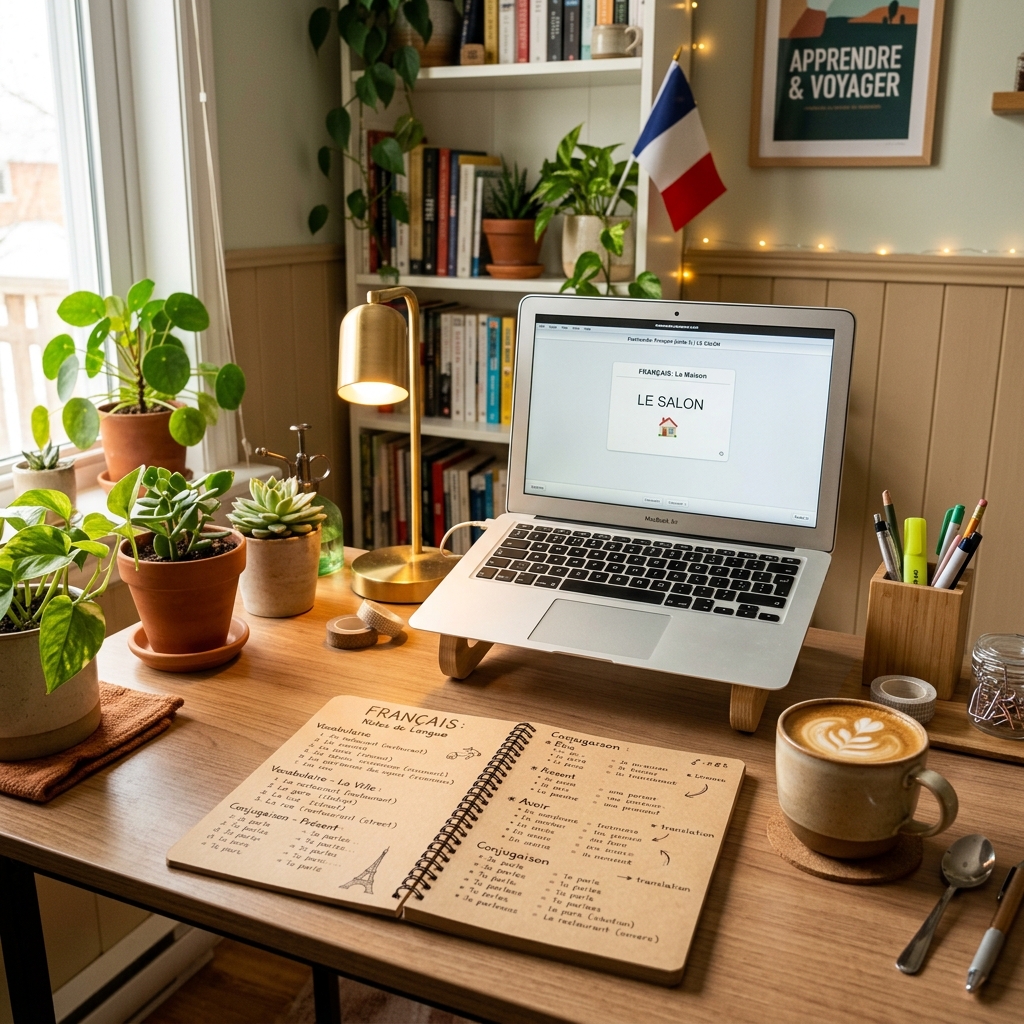
Cognates are the main reason Category I languages feel fast for English speakers. False friends are why that shortcut sometimes writes a check the sentence cannot cash. The Language Research Desk keeps both on one page: how to harvest the free vocabulary, and how to refuse a lookalike until a dictionary says yes.
This is a listing of high-frequency patterns, not a claim that the desk sat in five classrooms and got laughed at for using them. The examples below are standard textbook traps and everyday cognates. When a word is close but not confirmed, the desk check is always the same: look it up before you use it.
Cognate overlap is also why English speakers often start with the easiest languages for English speakers and why the how-to sibling treats Romance and Germanic roots as a practical advantage, not a personality trait.
What Cognates Actually Are
Cognates are words in different languages that share an ancestor and still share a meaning (or a close meaning). English information and Spanish información both come from Latin. English house and German Haus both come from a Germanic root. You did not “learn” those words so much as recognize them.
Three desk distinctions:
- True cognates: form and meaning line up well enough to use (animal, hospital, music / música / musique).
- Partial cognates: the core meaning overlaps, but usage or register differs. French actuel is “current,” not “actual.” You can see the family and still pick the wrong English sense.
- False friends: the form invites the wrong English word. These are the pitfall the rest of this page exists to catch.
Cognates are free vocabulary only after the meaning is checked. Until then they are hypotheses.
High-Frequency Cognates English Speakers Already Have
These are recognition lists, not a promise that every form is identical in every dialect. Accents, gender endings, and spelling conventions still apply.
English–Spanish
Spanish is unusually generous with Latinate English. That is a large part of whether Spanish is easy to learn.
| English | Spanish | Desk note |
|---|---|---|
| information | información | -tion → -ción is a reliable family |
| university | universidad | -ty → -dad |
| family | familia | stress on the second syllable |
| important | importante | adjective ending -e |
| telephone | teléfono | written accent marks the stress |
| animal | animal | same spelling, different pronunciation |
| possible | posible | one s |
| problem | problema | masculine, despite the -a |
| culture | cultura | |
| restaurant | restaurante | |
| music | música | |
| natural | natural | |
| moment | momento | |
| doctor | doctor / doctora | gender of the person |
| nation | nación |
English–French
French donated a huge Latinate layer to English after 1066. The trap is pronunciation, not always meaning. See is French easy to learn for why spelling looks friendly and speech does not.
| English | French | Desk note |
|---|---|---|
| information | information | same spelling, French stress |
| nation | nation | |
| table | table | |
| restaurant | restaurant | silent final letters |
| important | important | feminine importante |
| possible | possible | |
| nature | nature | |
| animal | animal | |
| culture | culture | |
| problem | problème | accent on the first e |
| moment | moment | |
| hospital | hôpital | circumflex; the s moved into the accent |
| university | université | |
| music | musique | -ic → -ique |
| fruit | fruit |
English–German
German overlap is older and more “house / water / hand” than “information / university.” That is why German can feel both familiar and hard; the honest difficulty write-up is is German hard to learn.
| English | German | Desk note |
|---|---|---|
| house | Haus | capitalization of nouns |
| water | Wasser | |
| garden | Garten | |
| winter | Winter | same spelling |
| hand | Hand | |
| name | Name | |
| friend | Freund | |
| mother | Mutter | |
| father | Vater | |
| brother | Bruder | |
| sister | Schwester | |
| finger | Finger | |
| arm | Arm | |
| gold | Gold | |
| warm | warm | |
| book | Buch | less obvious, still the same family |
| drink | trinken | verb pair |
| come | kommen | |
| bring | bringen |
English–Italian
Italian is often the most phonetic of the major Romance options. Cognates still need the right ending. The broader case is is Italian easy to learn.
| English | Italian | Desk note |
|---|---|---|
| university | università | final accent |
| family | famiglia | -gli- is a palatal l |
| important | importante | |
| telephone | telefono | |
| animal | animale | |
| possible | possibile | double s |
| problem | problema | masculine |
| moment | momento | |
| nation | nazione | -tion → -zione |
| culture | cultura | |
| restaurant | ristorante | ristor- not restaur- |
| music | musica | |
| information | informazione | |
| natural | naturale | |
| doctor | dottore / dottoressa |
English–Portuguese
Portuguese looks like Spanish until the vowels move. Cognates still carry a lot of beginner reading. See is Portuguese easy to learn.
| English | Portuguese | Desk note |
|---|---|---|
| information | informação | -tion → -ção |
| university | universidade | |
| family | família | accent on i |
| important | importante | |
| telephone | telefone | |
| animal | animal | |
| possible | possível | |
| problem | problema | |
| moment | momento | |
| nation | nação | |
| culture | cultura | |
| restaurant | restaurante | |
| music | música | |
| natural | natural | |
| doctor | doutor / doutora |
These lists are why the European difficulty ranking keeps grouping Spanish, French, Italian, and Portuguese together for English speakers. Shared Latin is a head start. It is not a license to skip the dictionary.
False Friends Worth Checking Before You Speak
False friends (faux amis) look like a shortcut and pay out the wrong meaning. The embarrassment is memorable. The desk would still rather you verify first.
Spanish
- embarazada — pregnant, not embarrassed (avergonzado/a)
- éxito — success, not an exit (salida)
- sensible — sensitive, not sensible (sensato/a)
- actualmente — currently, not actually (en realidad)
- constipado/a — has a cold, not constipated
- librería — bookstore, not a library (biblioteca)
- compromiso — commitment or engagement, not a compromise
- molestar — to bother, not the English legal sense of molest
- realizar — to carry out or accomplish; “to realize” as in notice is usually darse cuenta
- grosería — rudeness or a swear, not a grocery store (tienda / supermercado)
French
- blessé — injured, not blessed
- actuellement — currently, not actually (en fait)
- préservatif — condom, not a food preservative (conservateur)
- librairie — bookstore, not a library (bibliothèque)
- coin — corner, not a metal coin (pièce)
- chair — flesh, not a chair (chaise)
- location — a rental, not a geographic location (endroit, lieu)
- attendre — to wait, not to attend (assister à)
- rester — to stay, not to rest (se reposer)
- journée — a day as a span of time, not a journey (voyage)
German
- Gift — poison, not a present (Geschenk)
- bald — soon, not hairless (kahl, glatzköpfig)
- Chef — boss, not a cook (Koch / Köchin)
- also — therefore / so, not “also” (auch)
- bekommen — to receive, not to become (werden)
- Wand — a wall, not a magic wand
- Kind — child, not “kind” as in nice (nett, freundlich)
- Rat — advice or a council, not the animal (Ratte)
- fast — almost, not speedy (schnell)
- hell — bright, not the afterlife (Hölle)
- brav — well-behaved, not brave (mutig)
Italian
- camera — a room, not a photo camera (macchina fotografica, fotocamera)
- parenti — relatives, not parents (genitori)
- fattoria — a farm, not a factory (fabbrica)
- educato — polite, not necessarily “educated”
- pretendere — to demand or claim, not to pretend (fare finta)
- rumore — noise, not a rumor (voce, pettegolezzo)
- attuale — current, not actual
- libreria — bookstore, not a library (biblioteca)
- novella — a short story, not a novel (romanzo)
Portuguese
- pasta — a folder, briefcase, or toothpaste; food pasta is massa
- êxito — success, not an exit (saída)
- educado — polite
- pretender — to intend
- puxar — to pull, not to push (empurrar)
- esquisito — odd or weird, not exquisite
- acordar — to wake up
- parentes — relatives, not parents (pais)
- enrolar — to roll up, or to stall someone; not “enroll” (inscrever-se)
- exquisito is not the everyday spelling you want — esquisito is the false friend that shows up in speech
How to Use Cognates Without Trusting Lookalikes
Desk method, not a classroom story:
- On first encounter, ask only “does this resemble English?” If yes, treat it as a candidate cognate, not as a known word.
- Prefer families over one-off guesses. English -tion / Spanish -ción / French -tion / Italian -zione / Portuguese -ção is a real pattern. So is English -ty / Spanish -dad / French -té / Italian -tà. Patterns beat isolated luck.
- Be harsher with almost-English words. Sensible, actualmente, Gift, camera, pasta are the danger set: close enough to skip the check, wrong enough to change the sentence.
- Use context as a reading crutch, not as a speaking license. If the paragraph still makes sense, your reading guess can stand for now. Before you say the word, verify.
- Keep a short personal trap list. Ten false friends you have actually met will save more trouble than a 200-row internet list you never review.
Cognates should speed how you learn the easiest languages. They should not replace a frequency vocabulary plan. A cognate you never produce is still only recognition.
Desk Check: Verify a Near-Match Before You Use It
Listing check (The Language Research Desk): This is a dictionary-and-context check, not a product review. Confirm the headword, the part of speech, and one example sentence in a reputable bilingual or monolingual dictionary before you reuse a lookalike. Learner dictionaries (simple defining vocabulary) are enough at B1. Do not trust a single unsourced “funny false friends” graphic.
What to verify, in order:
- Meaning in this sentence, not the first English word that comes to mind.
- Part of speech. Gift as a German noun is not an English verb.
- Register. Some cognates are fine in writing and odd in speech, or the reverse.
- Gender and article in the Romance languages and German — problema is not feminine in Spanish just because it ends in a.
- Whether you need the word at all. If a simpler confirmed word exists, use that.
If two dictionaries disagree, do not perform the word in public yet. That is the whole method. The embarrassment of a false friend is a strong memory aid only after you have already said it. The desk would rather you spend ten seconds on a lookup.
For the broader “which language is actually easy” question that cognates sit inside, start with the English-speaker ranking and the European ranking, then read the individual honesty pages for Spanish, French, German, Italian, and Portuguese.
Frequently Asked Questions
What is a cognate in language learning? ▼
A cognate is a word that looks or sounds similar across two languages and still means roughly the same thing because the languages share a root. English information and Spanish información are a standard example. Cognates are free vocabulary only after you confirm the meaning.
What is a false friend? ▼
A false friend looks like a word you know but does not mean what it looks like. Spanish embarazada means pregnant, not embarrassed. German Gift means poison, not a present. The Language Research Desk's rule is: near-matches get a dictionary check before they go in your mouth.
Which languages give English speakers the most cognates? ▼
Romance and Germanic languages share the most high-frequency overlap with English. That is a large part of why Spanish, French, Italian, Portuguese, Dutch, and Norwegian sit in the easier FSI bands. Overlap is not the same as identical meaning, which is why this page exists next to the difficulty rankings.
Should I guess a word if it looks like English? ▼
Guess for reading when the sentence still makes sense. Do not reuse the guess in speech until a dictionary or a clear context confirms it. Lookalikes are how learners say they are pregnant, ask for a condom when they meant a preservative, or offer someone poison.
How do I study cognates without memorizing a trap list? ▼
Collect confirmed cognates in families (-tion/-ción/-zione, -ty/-dad/-tà). Keep a short false-friend list of words you have actually met. Verify each new near-match once, then move on. A giant bilingual lookalike list is less useful than a desk check at the moment of use.
We research and compile information about language learning from linguistic studies, FSI data, and language learning communities.
Related reading
Learning TipsHow Many Words Do You Need to Be Fluent in a Language?
The real vocabulary numbers for fluency, from survival basics to native-level comprehension. Data-backed word count targets.
Learning TipsHow to Maintain a Second Language When You Have No One to Speak With
Keep a second language alive with no conversation partner. Solo speaking, reading, and listening routines that prevent attrition.
Learning TipsLanguage Immersion at Home: How to Surround Yourself Without Traveling
You do not need to move abroad to create an immersive environment. Here is how to build one in your living room.