How to Learn Spanish Fast for Free: A Realistic Guide
The Language Research Desk
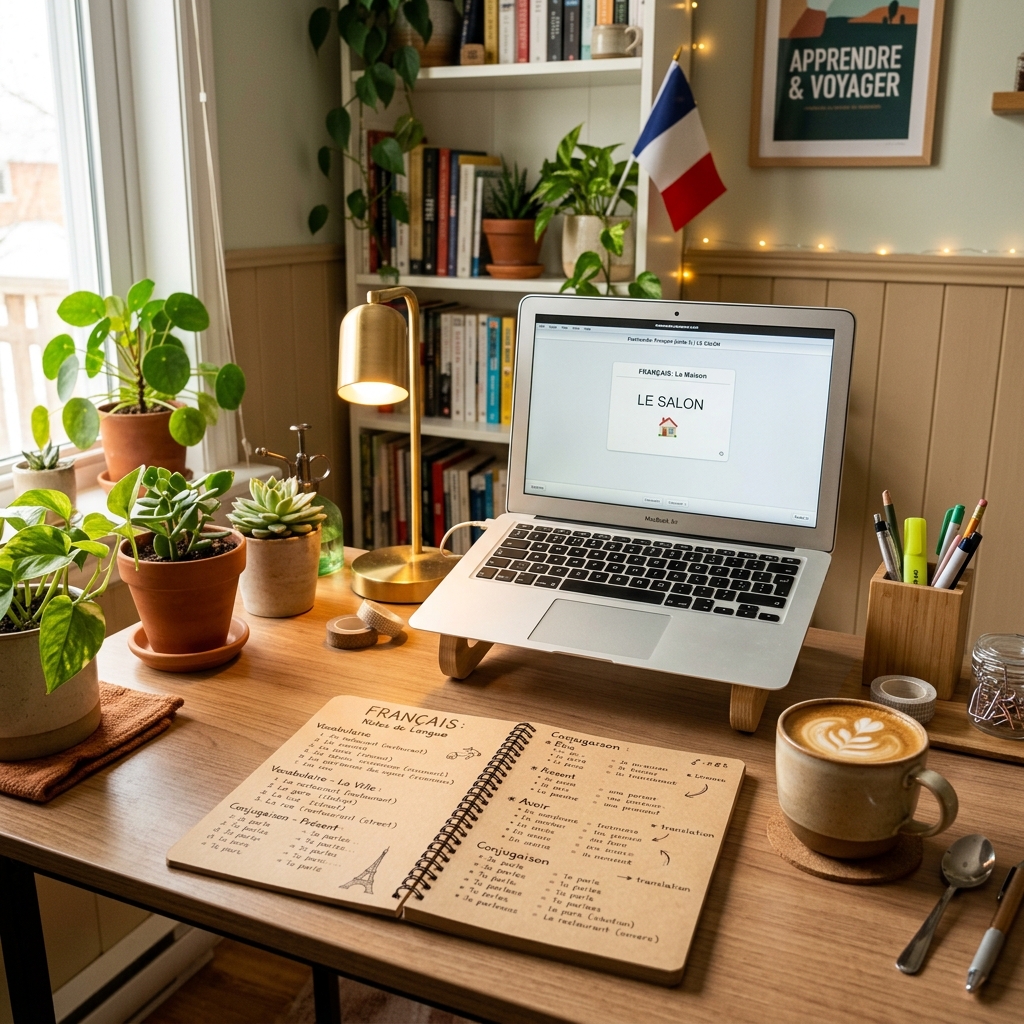
Spanish is the easiest major language for most English speakers, and it is the one with the densest free stack. You do not need Rosetta Stone, a private tutor, or an immersion program to start. You need a daily routine that covers four jobs: reading, writing, listening, and speaking.
The Language Research Desk does not run a 90-day “free Spanish lab” and does not promise a month-by-month fluency diary. The notes below are a job stack: which free tool does which job, and when a book or tutor is the rational upgrade instead of another download. Difficulty context is Is Spanish easy to learn?. The hour clock is how long it takes to learn a language and the FSI rankings. You can also plug Spanish, weekly hours, and a goal into the language learning time calculator.
Why Spanish is the best language to learn for free
Free Spanish material exists because demand, media, and community are unusually large:
- Demand: Spanish is the most studied second language in the US, so companies give away courses to acquire users.
- Media: News, music, YouTube, and shows in Spanish are easy to find without a subscription course.
- Community: Conversation partners and local practice exist in many cities.
- Overlap with English: Shared Latin roots help on cognates. They do not erase verbs, mood, or listening speed. For the shortcut and the traps, see cognates and false friends.
None of that makes Spanish “effortless.” It makes the free kit less empty than it is for Norwegian or Korean.
The best free resources, ranked by job
Structured learning
Duolingo (free tier) Job: Daily habit, basic vocabulary, easy streaks.
The Spanish course is their most developed. Fifteen to twenty minutes is enough for this slot. Super removes ads and adds perks; it is not a fluency SKU. Listing notes on habit versus grammar apps are on Duolingo vs Babbel vs Rosetta Stone.
Language Transfer (Complete Spanish) Job: Free grammar-through-dialogue audio. The best no-cost explanation layer.
Available as a podcast and on YouTube. Use it when Duolingo shows a pattern and does not explain it. Channel context: best YouTube channels.
SpanishDict Job: Dictionary, conjugations, grammar lookup. Bookmark, do not “study the site.”
Listening practice
Dreaming Spanish (YouTube) Job: Comprehensible input with level labels (superbeginner upward). Gestures and slow speech, not translation drills.
News in Slow Spanish (free episodes) Job: Intermediate current events, slower than native news. Premium is an archive/transcript SKU — skip it until you use transcripts. Show-level notes: best podcasts to learn languages.
Spanish podcasts in your interests: True crime, sport, cooking — native or near-native, only after learner audio is easy. Passive chores-listening is exposure; pausing and repeating is study.
Speaking practice
HelloTalk and Tandem (free tiers) Job: Reciprocal conversation. Half Spanish, half English. Platform differences (feed versus 1:1 matching, when to skip Pro) are on language exchange apps.
Local conversation groups: Libraries, community centers, Meetup. Free, uneven quality, useful once you can form sentences.
Reading practice
SpanishPod101 free lists / notes — topic packets, not a full course. The paid catalog is a different listing; do not confuse a free PDF with a membership.
LingQ (free tier) — import text, click translations. Limits are the product. Enough for beginners; not a reason to subscribe in week one.
Phone in Spanish — every menu is a micro-reading drill. Free and easy to undo.
A daily free Spanish routine
A sample 45-minute stack using only free tools:
| Time | Activity | Tool | Skill practiced |
|---|---|---|---|
| 15 min | Structured lesson | Duolingo | Vocabulary, grammar, reading |
| 10 min | Grammar study | Language Transfer (audio) | Grammar understanding |
| 10 min | Listening | Dreaming Spanish (YouTube) | Listening comprehension |
| 10 min | Conversation exchange | HelloTalk / Tandem | Speaking |
Weekly add-ons (2–3 times):
- A Spanish-language show with Spanish subtitles (library or whatever you already pay for — this page does not require Netflix)
- A short article on a clear news site (BBC Mundo is a common free choice)
- Anki reviews (free on desktop and Android) for 10 minutes — see best flashcard apps
Desk rule: Do not add a fifth daily app. If a slot is empty, fill that job. If every slot is unused, the stack is not the problem.
A realistic timeline (not a lab diary)
These are planning ranges for 30–60 minutes most days, not a promise and not a personal log.
Weeks 1–4: Survival basics — greetings, food, directions. Words in isolation more than full speech.
Months 2–3: Short, predictable conversations. Gist of slow, clear Spanish.
Months 4–6: Everyday topics, opinions in simple sentences, moderate spoken Spanish. Errors, but you are understood.
Months 6–12: Wider topics, stories, most casual speech. Jokes and references start to land.
Months 12–18: Most social conversations, news and articles with lookups, more accurate production.
FSI’s 600–750 classroom hours is the professional-proficiency figure, not this café timeline. Free resources do not shrink the hour count; they change the price of each hour.
Common mistakes that slow you down
Studying without speaking. Start exchange or a local group by month two. Speaking is a separate skill.
Perfectionism. Errors are the work. Native partners are not a grading committee.
Wallpaper audio. A podcast while you clean is not a study block. Use the three-pass idea on the podcasts page for episodes you actually want to learn from.
Ignoring grammar entirely. Children get thousands of hours. Adults with a commute need explanations. Language Transfer or a reference fills that hole.
Changing resources every week. Pick the stack above for 30 days. Researching the “best” app is not practice.
Free vs paid: skip-buy rules
Free tools can carry you to comfortable intermediate conversation. Paid tools earn a place only when a job is still empty:
- Tutor (italki, Preply): Real-time correction. One session a week is the usual upgrade, not a daily marketplace habit. Platform and trial-lesson checks: best online language tutors. Skip if you already have a partner who interrupts you.
- A textbook: When the same grammar hole keeps winning. Titles and edition checks: best books to learn Spanish.
- Premium apps (Babbel, Pimsleur): Structure and speech prompts. Needed only if Duolingo + Language Transfer is the bottleneck — not because an ad said so.
If you can fund only one paid thing, a weekly tutor usually beats a second app subscription.
Optional listings (only when the free stack stalls)
Madrigal’s Magic Key to Spanish is the cognate-pattern beginner book the desk already lists on the Spanish books page. Check price on Amazon →
Listing check (The Language Research Desk): Confirm Madrigal’s Magic Key to Spanish by Margarita Madrigal, paperback versus a later reprint, and that you are not buying an unrelated “magic key” workbook. There is no included audio — keep Language Transfer or a tutor for pronunciation. Skip this book if cognates are already easy and you need drills; then the Practice Makes Perfect bind-up on the books page is the other listing.
Short Stories in Spanish for Beginners by Olly Richards is a graded-reader listing for A2–B1, when news articles are still too hard and you want pages with a glossary.
Listing check: Confirm the Spanish beginner volume, not French/Italian in the same series, and paperback versus Kindle. Skip it if you are still on Dreaming Spanish superbeginner videos.
Pimsleur Spanish Level 1 (CD box set) is commute audio with speak-aloud prompts, for people who will not open YouTube on a drive. Check price on Amazon →
Listing check: Level 1, Spanish, CD versus app subscription. The subscription is not this box. Skip Pimsleur if Language Transfer plus a podcast already fills the audio slot.
Desk buying notes vs store copy
| Store claim | Desk reading |
|---|---|
| “Fluent in 15 minutes a day” | Fifteen minutes is a habit. Fluency is FSI-scale hours plus speech. |
| Super / Premium / Lifetime | Ads off, extra modes, or a license term — not a tutor. |
| “Complete Spanish course” box on a marketplace | Often a reprint or a PDF dump. Prefer a named textbook listing. |
| Free + four paid apps | One free stack. Add one paid job, not a bundle. |
Method mix (input, SRS, output) is on language learning methods compared. App jobs without a Spanish-only angle are on what works and what does not.
The bottom line
Learning Spanish for free is a practical first-year plan, not a slogan. The free stack in 2026 covers habit, grammar audio, input, and partners. What it cannot sell you is guaranteed interruption — that is a conversation partner (free) or a tutor (paid). Forty-five minutes most days beats a Sunday binge. Set a time, keep the same three tools for a month, and only then decide whether a book or a lesson is the empty job.
Frequently Asked Questions
Can I really learn Spanish for free? ▼
You can reach useful conversation with free tools: Duolingo or Language Transfer, YouTube input, free podcasts, an exchange app, and library books. Paid tools save time. They are not required for a first year of progress. The Language Research Desk treats paid tutors and textbooks as optional upgrades when a specific job is empty.
How long does it take to learn Spanish for free? ▼
With 30–60 minutes most days, many learners handle basic conversation in a few months and more comfortable chat inside a year or so. The FSI figure of roughly 600–750 classroom hours is professional working proficiency, not café Spanish. Free versus paid does not change that clock; it changes how structured the hours are.
What is the fastest free way to learn Spanish? ▼
A daily three-part stack: a structured lesson (Duolingo or Language Transfer), comprehensible input (Dreaming Spanish or a learner podcast), and output (HelloTalk, Tandem, or a local conversation group). That covers structure, input, and speech. Switching apps every week is the slow path.
Is Duolingo good enough to learn Spanish? ▼
Duolingo is a habit and vocabulary starter, not a speaking product. Use it as one slot. Add grammar explanation (Language Transfer or a reference), real listening, and a person. Super removes ads; it does not add a tutor.
Do I need to take a class to learn Spanish? ▼
No. Free self-study can take you a long way. A class or a weekly tutor adds interruption and homework. If two or three months of a free stack produce no speech, add one paid conversation hour rather than a fourth free app.
When should I buy a Spanish book or tutor instead of staying free? ▼
Buy a textbook when you keep meeting the same grammar hole and the free explainers are not sticking. Buy a tutor when you have sentences but no one interrupts you. Skip both if the free stack is still unused. Listing checks for titles live on the Spanish books page; platform checks live on the tutors page.
We research and compile information about language learning from linguistic studies, FSI data, and language learning communities.
Related reading
Learning TipsEasiest Language to Learn After 40: It's Not Too Late
Think you are too old to learn a language? Research says otherwise. Here are the best languages and strategies for adult learners over 40.
 Comparisons
Easiest Language to Learn for Business and Career Growth
Which easy-to-learn languages offer the best career ROI? We rank languages by business utility, job demand, and learning difficulty.
 Language Rankings
What Is the Easiest Language to Learn for English Speakers?
Discover the 10 easiest languages for English speakers ranked by FSI data, grammar complexity, and learner experience. Updated for 2026.