Best Books to Learn French by Self Study
The Language Research Desk
As an Amazon Associate we may earn a commission from qualifying purchases made through links on this page, at no extra cost to you.
A good French textbook does what no app can: it explains grammar in depth, provides context for vocabulary, and gives you a reference you can return to whenever you hit a wall. The problem is that most bookstores stock dozens of French learning books, and the quality varies wildly. Some are outdated. Some are designed for classroom use and make no sense without a teacher. Some are excellent.
The Language Research Desk reviews the titles below as self-study listings: audio code, answer key, and whether the book assumes a teacher. This is not a classroom diary and not Amazon jacket copy. The Spanish sibling is best books to learn Spanish. Apps that sit next to a French book are on what each language app is for and 8 apps compared and ranked.
What Makes a Good Self-Study French Book
Not every French textbook works for independent learning. Books designed for classrooms assume a teacher will fill in gaps, provide pronunciation models, and create speaking opportunities. Self-study books need to do all of that themselves, or at least most of it.
What to look for:
- Audio component: French pronunciation is notoriously tricky. A book without audio is teaching you to read French, not speak it.
- Grammar explanations in plain English: Academic jargon (“the pluperfect subjunctive of irregular reflexive verbs”) is useless if you do not already know grammar terminology. Good self-study books explain concepts clearly.
- Exercises with answer keys: If there are no answers, you cannot check your own work.
- Progressive difficulty: The book should start simple and build complexity gradually.
- Cultural context: French is spoken differently in France, Quebec, West Africa, and the Caribbean. Good books acknowledge this.
For an overview of how French difficulty compares to other languages, see Is French easy to learn?. Category I hour bands (French sits with Spanish and Italian) are on FSI language difficulty rankings.
Best French Books by Category
Best Overall: Assimil French with Ease
Price: $65-80 (book + audio) | Level: Beginner to Intermediate | Format: Bilingual dialogue lessons
Assimil has been the gold standard for European self-study language learning since 1929. The method is simple: each lesson presents a short dialogue in French with an English translation on the facing page. You read, listen to the audio, and absorb grammar and vocabulary in context.
Why it works for self-study:
- Bilingual approach reduces frustration. You always know what is being said, so you spend mental energy on patterns rather than confusion.
- Audio is essential to the method. The native speaker recordings teach pronunciation, rhythm, and intonation that text cannot convey.
- Grammar is taught through exposure first, explanation second. You encounter a grammar point in dialogue before the book explains the rule. This mirrors how children learn, adapted for adult efficiency.
- 113 lessons take you from zero to solid intermediate. The book is a complete course, not a supplement.
Limitations:
- The bilingual format means you may rely on English translations too heavily if you are not disciplined about covering the English side
- Exercises are minimal: the method relies on repetition and absorption rather than drill practice
- The dialogues can feel dated (Assimil updates slowly)
- No speaking practice built in: you need to add conversation practice externally
Verdict: The best single book for taking yourself from beginner to intermediate French. Pair it with a conversation partner or tutor for speaking practice.
Listing check (The Language Research Desk): Confirm French with Ease (not a different Assimil language, and not Using French / advanced Assimil). Book + audio is the unit; a used copy without the download code is a different product. Dialogues lean European French.
Best Grammar Reference: Practice Makes Perfect: Complete French Grammar
Practice Makes Perfect: Complete French Grammar
Price: $14-18 | Level: All levels | Format: Grammar explanations + exercises
This is the grammar reference you keep on your desk and consult whenever you encounter a structure you do not understand. It covers every grammar topic from basic articles to the subjunctive, with clear explanations and hundreds of practice exercises.
Why it works for self-study:
- Explanations are clear and jargon-free. Each concept is introduced with examples before rules.
- Exercises after every section with a complete answer key in the back.
- Organized by topic so you can skip to whatever you need. No need to read it sequentially.
- Affordable: Under $18 for a comprehensive reference you will use for years.
Limitations:
- No audio component
- Exercises are grammar drills, not communicative activities
- Does not teach vocabulary systematically
Verdict: Not a standalone learning resource, but the best companion to any course or app. When Duolingo or Assimil introduces a grammar concept you do not fully grasp, this book explains it.
Listing check: McGraw-Hill Complete French Grammar vs Complete French All-in-One are different bind-ups. The Amazon search link above is a query, not a locked ISBN — open the product page and match subtitle, edition year, and answer key before you buy.
Best for Reading Practice: Short Stories in French (Olly Richards)
Short Stories in French for Beginners (Olly Richards)
Price: $12-15 | Level: Beginner to Low Intermediate | Format: Graded reader with glossary
Graded readers use simplified vocabulary and grammar to tell stories that are actually interesting. Olly Richards’ series is one of the best because the stories are engaging enough to make you want to keep reading, not just powering through for practice.
Why it works for self-study:
- Stories are genuinely enjoyable. The plots involve mystery, travel, and everyday situations that keep you turning pages.
- Glossary at the end of each chapter defines key vocabulary without requiring a separate dictionary.
- Comprehension questions test whether you actually understood what you read.
- Progressive difficulty within the book: early stories use simpler vocabulary than later ones.
Limitations:
- Simplified vocabulary means you are reading “learner French,” not authentic French
- No audio component
- Limited grammar explanations
Verdict: The best way to build reading fluency and vocabulary through enjoyable content. Start this after 2-3 months of structured study.
Listing check: “For Beginners” vs later volumes in the Olly Richards French series. Kindle vs paperback. Confirm it is the graded reader, not an unrelated contes anthology that search also returns.
Best Audio Course: Pimsleur French
Price: $15-21 per level (Audible) or $150 for full course | Level: Beginner | Format: Audio lessons (30 min each)
Pimsleur is a pure audio method. Each 30-minute lesson introduces new vocabulary and grammar through a listen-and-respond format. You hear a phrase, translate it, and speak it aloud. The spaced repetition built into the lesson design means you review material at optimal intervals.
Why it works for self-study:
- Pronunciation is the focus. Because you are listening to and imitating native speakers throughout, your pronunciation develops naturally. Pimsleur graduates consistently have better pronunciation than app-only learners.
- Hands-free learning. You can do Pimsleur while commuting, walking, or doing chores.
- Spaced repetition is built in. You do not need to manage flashcards; the lesson structure handles review timing.
- Builds confidence for conversation. The listen-and-respond format simulates real conversation pressure.
Limitations:
- No reading or writing component
- Vocabulary is limited and focused on survival situations (hotels, restaurants, directions)
- Repetitive format becomes tedious for some learners after 30-40 lessons
- Expensive if purchased as a standalone course
Verdict: The best audio-only resource and an excellent complement to a textbook. Use Pimsleur for pronunciation and listening while using Assimil or a grammar book for reading and grammar.
Listing check: Pimsleur French Level 1 vs a “complete” 5-level bundle vs the app subscription. Audible, CD, and the Pimsleur app are different SKUs and different prices. Level 1 is survival audio, not a reading course.
Best for Intermediate Learners: A Frequency Dictionary of French
A Frequency Dictionary of French
Price: $35-45 | Level: Intermediate | Format: Reference / vocabulary study
This book lists the 5,000 most frequently used French words in order of frequency, with example sentences and English translations. Learning vocabulary by frequency means you study the words you will encounter most often first.
Why it works for self-study:
- Efficient vocabulary building. The top 1,000 words cover roughly 85% of everyday French text. The top 3,000 cover over 95%.
- Example sentences provide context. You learn each word in a natural sentence, not in isolation.
- Organized by frequency and by theme. You can work through it sequentially (most common to least common) or by topic (food, travel, work, health).
Limitations:
- Not a course or textbook: pure reference material
- No exercises or activities
- No audio
Verdict: The most efficient way to expand your vocabulary once you have a grammar foundation. Pair it with Anki (free flashcard app) for spaced repetition. Card-app fit is on best flashcard apps for vocabulary.
Listing check: Routledge A Frequency Dictionary of French (Lonsdale / Le Bras series), not a tourist phrasebook that search also returns. Confirm hardcover vs paperback; these run expensive used. No audio — you still need a spoken source.
How to Combine These Books
Months 1-3 (beginner):
- Primary: Assimil French with Ease (one lesson per day, 30-40 minutes)
- Grammar backup: Practice Makes Perfect: Complete French Grammar (consult as needed)
- Audio supplement: Pimsleur French Level 1 (during commutes or walks)
- App: Duolingo or Babbel for daily vocabulary reinforcement (15 min)
Months 4-8 (lower intermediate):
- Continue: Assimil (finish the course)
- Add reading: Short Stories in French for Beginners
- Add conversation: Weekly language exchange via HelloTalk or a tutor on italki
- Vocabulary: Begin working through A Frequency Dictionary of French
Months 9-12+ (intermediate):
- Graduate to authentic content: French news (Le Monde, France 24), podcasts (InnerFrench), and Netflix shows with French subtitles
- Continue conversation practice: 2-3 sessions per week
- Grammar reference: Keep Practice Makes Perfect nearby for troubleshooting
For recommendations on apps to complement your book study, see 8 apps compared and ranked and the shorter what works and what does not stack. Pair the books with a weekly tutor from best online language tutors or a free partner on language exchange apps if pronunciation is the bottleneck. The wider kit (flashcards, study audio) is best language learning tools.
Buying Tips
- Buy physical books for grammar references. You will flip back and forth frequently, and physical books are better for quick reference than e-readers.
- Buy digital for readers and stories. Kindle versions let you tap words for instant translation, which speeds up reading practice.
- Check your local library first. Many libraries carry Assimil, Pimsleur CDs, and French readers. You can try a book before committing to a purchase.
- Buy one book at a time. The most common mistake is buying five French books on day one and using none of them consistently. Start with one main course (Assimil) and add resources only when you need them.
- Listing check (The Language Research Desk): Confirm Assimil is French with Ease (not a different Assimil language), Practice Makes Perfect is the Complete French Grammar or All-in-One you intended, and the frequency dictionary is the Routledge French title. Check ISBN and “with audio” on the Amazon page; older printings may omit the download code.
For a parallel guide on Spanish book recommendations, see best books to learn Spanish. If you are still choosing the language, easiest languages for English speakers is the ranking page, not a book list.
Frequently Asked Questions
What is the best book for learning French on your own? ▼
For most self-learners, Assimil French with Ease is the best starting point. It uses a bilingual text approach where you read French on one side and English on the other, gradually reducing your reliance on translation. The audio component builds listening skills simultaneously. For grammar-focused learners, Practice Makes Perfect: Complete French Grammar is the strongest reference.
Can I learn French from a book without a teacher? ▼
Yes, but a book alone has limitations. Books teach grammar, vocabulary, and reading well. They cannot teach pronunciation accurately or give you speaking practice. Combine a textbook with audio resources (the book's companion audio, podcasts, or YouTube) and conversation practice (language exchange apps or a tutor) for a complete self-study plan.
How many books do I need to learn French? ▼
Start with one main textbook or course book and one grammar reference. Two books are enough for the first 6-12 months. Adding a graded reader (simplified French novel) when you reach an intermediate level builds reading fluency. Most learners accumulate 3-5 useful books over their learning journey.
Should I use a French textbook or an app? ▼
Both serve different purposes. Apps excel at daily habit-building and vocabulary through repetition. Textbooks excel at grammar explanations, structured progression, and deeper comprehension. The best approach is to use both: an app for daily practice and a textbook for understanding grammar and reading longer texts.
Are French grammar books necessary? ▼
For adult self-learners, yes. Children pick up grammar through exposure, but adults learn faster when grammar patterns are explained explicitly. A grammar reference does not need to be read cover to cover. Use it to look up specific structures as you encounter them in reading or conversation.
We research and compile information about language learning from linguistic studies, FSI data, and language learning communities.
Related reading
 Book Reviews
Best Books to Learn Spanish for Beginners
The best Spanish textbooks, workbooks, and readers for beginners in 2026. Reviewed by learning style with honest pros and cons.
 App Reviews
The 7 Best Language Exchange Apps for Real Conversation Practice in 2026
Desk notes on HelloTalk, Tandem, italki community, and other exchange apps — matching jobs, free-tier limits, and when not to pay Pro.
 App Reviews
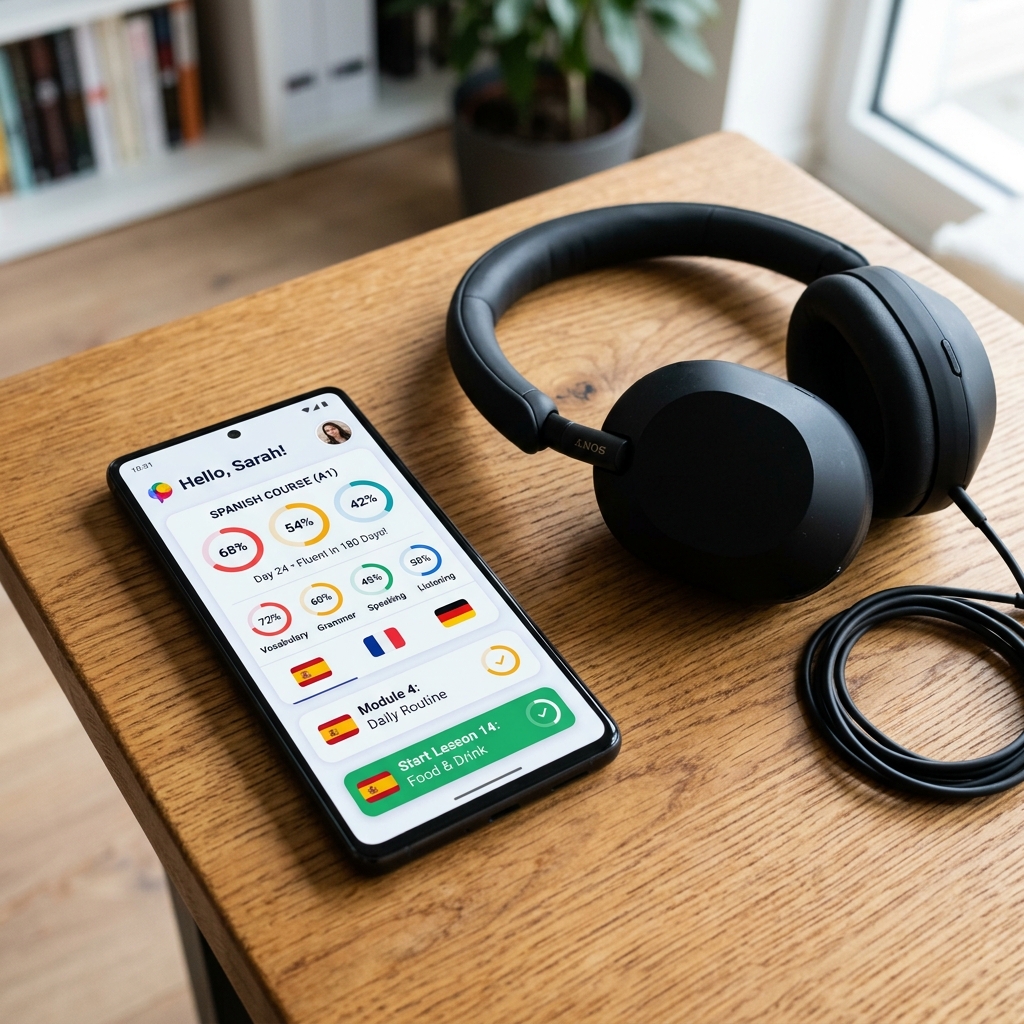
Best Language Learning Apps: 8 Apps Compared and Ranked
We researched 8 language learning apps in depth. Here are honest rankings with pricing, pros, cons, and which app fits your goals.