How Long Does It Really Take to Learn a Language? FSI Data Explained
The Language Research Desk
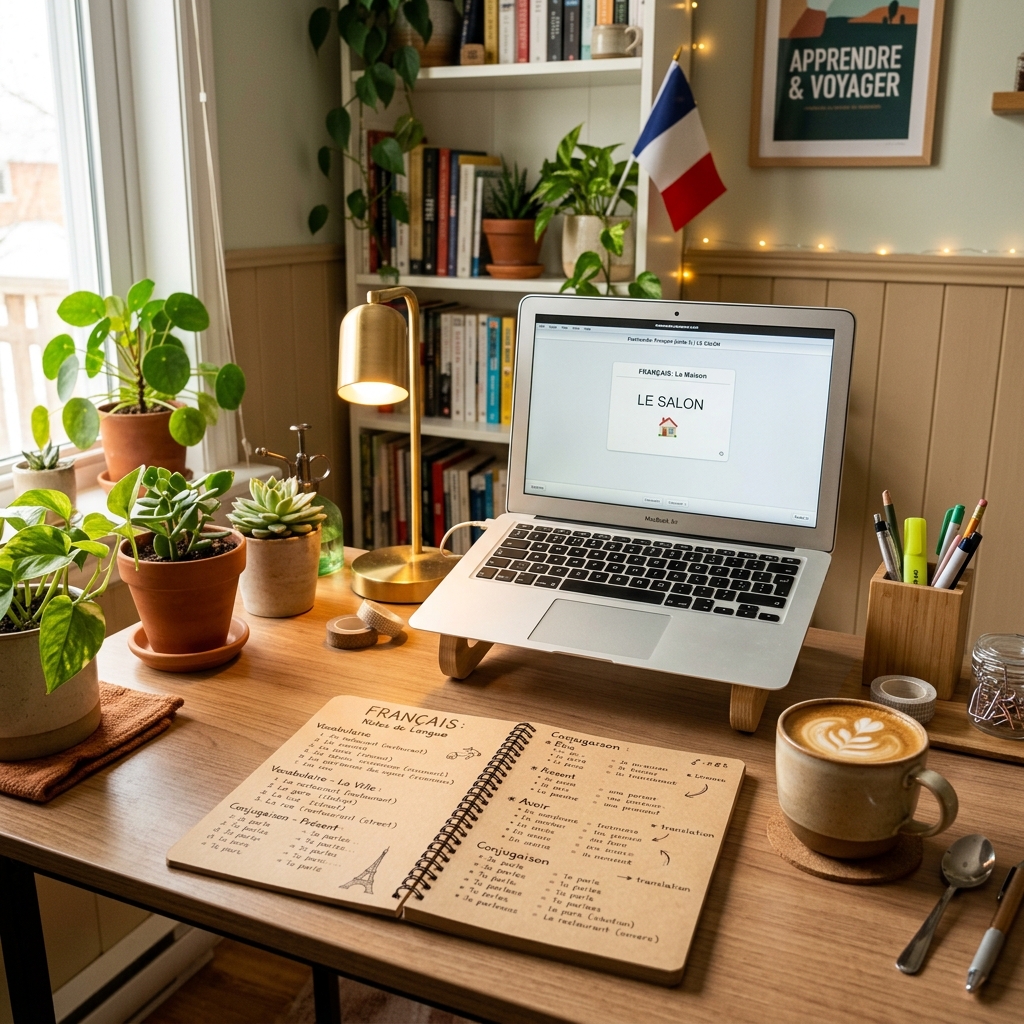
This page is the calendar sibling: what FSI hour bands mean when you study 30–60 minutes a day, and which products do not change the math. The category lists and what ILR Level 3 actually measures live on FSI language difficulty rankings explained. Both URLs stay live.
As an Amazon Associate we may earn a commission from qualifying purchases made through links on this page, at no extra cost to you.
The Language Research Desk does not run a timed fluency lab and does not claim a 90-day diary. The notes below are listing checks against published FSI hour bands and how beginners usually waste a quarter: buying a “fluent in 30 days” book, stacking two beginner apps, or treating a lifetime deal as a method.
The FSI Classification System
The Foreign Service Institute (FSI) has been teaching languages to American diplomats since 1947. They track how many classroom hours it takes an English speaker to reach Professional Working Proficiency (ILR Level 3) in each language. For the full category lists and what the hour numbers actually measure, stay on the FSI rankings page.
Those hours assume intensive classroom days, professional teachers, and a high target. They are a planning number, not a store rating.
The Four Categories (hour bands only)
Category I: 24–30 weeks (600–750 hours)
The easiest languages for English speakers. Close linguistic relatives with similar grammar, vocabulary, and writing systems.
Languages: Spanish, French, Italian, Portuguese, Romanian, Dutch, Norwegian, Swedish, Danish, Afrikaans.
Honesty pages for the common first picks: Spanish, French, Italian, Portuguese, Dutch, Norwegian. The ranked list is easiest language to learn for English speakers.
Category II: 36 weeks (900 hours)
Languages with significant differences from English but still manageable structural similarities.
Languages: German, Indonesian, Malay, Swahili, Haitian Creole.
German is the usual Category II question on this site: Is German hard to learn?
Category III: 44 weeks (1,100 hours)
Languages with significant linguistic or cultural differences from English.
Languages: Hindi, Urdu, Russian, Polish, Czech, Greek, Hebrew, Turkish, Thai, Vietnamese, Burmese. For the Slavic subset, see easiest Slavic language to learn.
Category IV: 88 weeks (2,200 hours)
The hardest languages for English speakers. Completely different writing systems, grammar structures, and cultural contexts.
Languages: Arabic, Mandarin Chinese, Cantonese, Japanese, Korean.
Desk honesty pages: Is Korean hard to learn? and Is Mandarin Chinese hard to learn?. Hangul vs characters is also on the easiest Asian languages ranking.
What this means for self-learners
FSI data assumes intensive, full-time classroom instruction with professional teachers and immersive practice. Self-learners typically take 2–3× longer because:
- Study sessions are shorter and less frequent
- No native-speaker teacher providing instant correction
- Less structured practice
- Motivation fluctuations
A realistic estimate for a self-learner studying 30 minutes daily:
- Category I languages: 3–4 years to conversational fluency
- Category IV languages: 7–10 years to conversational fluency
That is desk arithmetic on the published hour bands, not a cohort we timed.
Get your own estimate: Plug your language, goal, and weekly hours into our Language Learning Time Calculator to see your personal timeline in hours, months, and years.
Intensity vs calendar time
Total hours matter more than calendar time. Someone studying 2 hours daily will reach the same hour total in half the calendar time as someone studying 1 hour daily. Consistency and intensity are the two levers you can control.
| Weekly hours | Category I (≈700 classroom hrs × 2 for self-study) | Category IV (≈2,200 × 2) |
|---|---|---|
| 3.5 (30 min/day) | ~2–4 years | ~7–10 years |
| 7 (1 hr/day) | ~1–2 years | ~3.5–5 years |
| 14 (2 hrs/day) | ~6–12 months | ~2–3 years |
The multiplier (about 2× classroom hours) is a planning range, not a promise. Speaking weekly and getting correction moves you toward the low end. App-only streaks without output sit on the high end. Method comparison lives on language learning methods compared.
Skip-buy notes vs “fast fluency” products
No book or app changes the FSI band. A Category I language is still hundreds of hours. A Category IV language is still thousands.
Fluent Forever by Gabriel Wyner is the method book the desk already cites for pronunciation and image-based cards. It can make each hour less wasteful. It does not turn 900 hours into 30 days. Check price on Amazon →
Listing check (The Language Research Desk): Confirm the Wyner Fluent Forever method book (original or revised), not a blank notebook kit or a “fluent in 30 days” lookalike. Check the table of contents. We cite it as a how-to for cards and sounds, not as a timeline product.
| Tempting add-on | Desk reading |
|---|---|
| “Fluent in 30 days” / “speak in two weeks” book | Marketing against FSI hour bands. Skip. |
| Second beginner app because week 3 felt slow | Same job twice. One course. See apps compared. |
| Category IV textbook while you are still on Category I Spanish | Finish one language’s first course. Polyglot stacking notes are on polyglot tips. |
| Lifetime app deal as a “method” | A payment plan, not hours. |
| Headphones or a fancy notebook as a complete system | Optional hardware. The hour total does not move. Kit jobs are on best language learning tools. |
If you already have a Category I study plan, use how to learn the easiest languages for English speakers. Do not buy a second timeline book to “speed up” the same hours.
The Key Insight
Total hours matter more than calendar time. Someone studying 2 hours daily will reach fluency in half the calendar time as someone studying 1 hour daily, even though the total hours are the same. Consistency and intensity are the two levers you can control.
For word-count targets that sit next to these hour bands, see how many words you need to be fluent.
Frequently Asked Questions
How long does it take to learn a language? ▼
It depends on the FSI category and your weekly hours, not on a store-page promise. Category I languages sit near 600–750 classroom hours to professional working proficiency. Category IV sits near 2,200. Self-learners usually need 1.5–3× those classroom hours because sessions are shorter and less corrected. Total hours beat calendar months.
Are FSI hours a fluency guarantee? ▼
No. FSI hours measure classroom time to ILR Level 3 for diplomats in intensive programs. They are not “conversational in 30 days” and not a score for any app or book. Treat them as a lower bound for self-study.
How long at 30 minutes a day? ▼
Rough desk math, not a lab: Category I often lands around 3–4 years to a comfortable conversational level if you actually speak. Category IV often lands around 7–10 years at the same pace. Doubling daily time cuts the calendar, not the hour total. Use the language learning time calculator for a personal split.
Is this page the same as the FSI rankings article? ▼
No. The FSI rankings page explains categories, language lists, and what ILR 3 means. This page converts those hour bands into self-learner calendars and skip-buy notes. Both URLs stay live.
Should I buy a book that promises fluency in 30 days? ▼
No. Skip that genre. A method book such as Fluent Forever explains how to make cards and train pronunciation. It is not a timeline product and not a language course. One structured course plus weekly speaking beats a stack of “fast fluency” titles.
We research and compile information about language learning from linguistic studies, FSI data, and language learning communities.
Related reading
 Language Rankings
Easiest Asian Languages for English Speakers: Ranked by Difficulty
Which Asian languages are easiest for English speakers? We rank them using FSI data, grammar complexity, and writing systems.
 Language Rankings
Easiest European Languages to Learn: Complete Ranking for English Speakers
All major European languages ranked by difficulty for English speakers using FSI data, grammar complexity, and resources.
Language RankingsFSI Language Difficulty Rankings Explained: How Long Does Each Language Take?
The Foreign Service Institute ranks 70+ languages by difficulty. Learn how FSI categories work and what the hour estimates really mean.