Is French Easy to Learn? The Honest Truth for English Speakers
The Language Research Desk
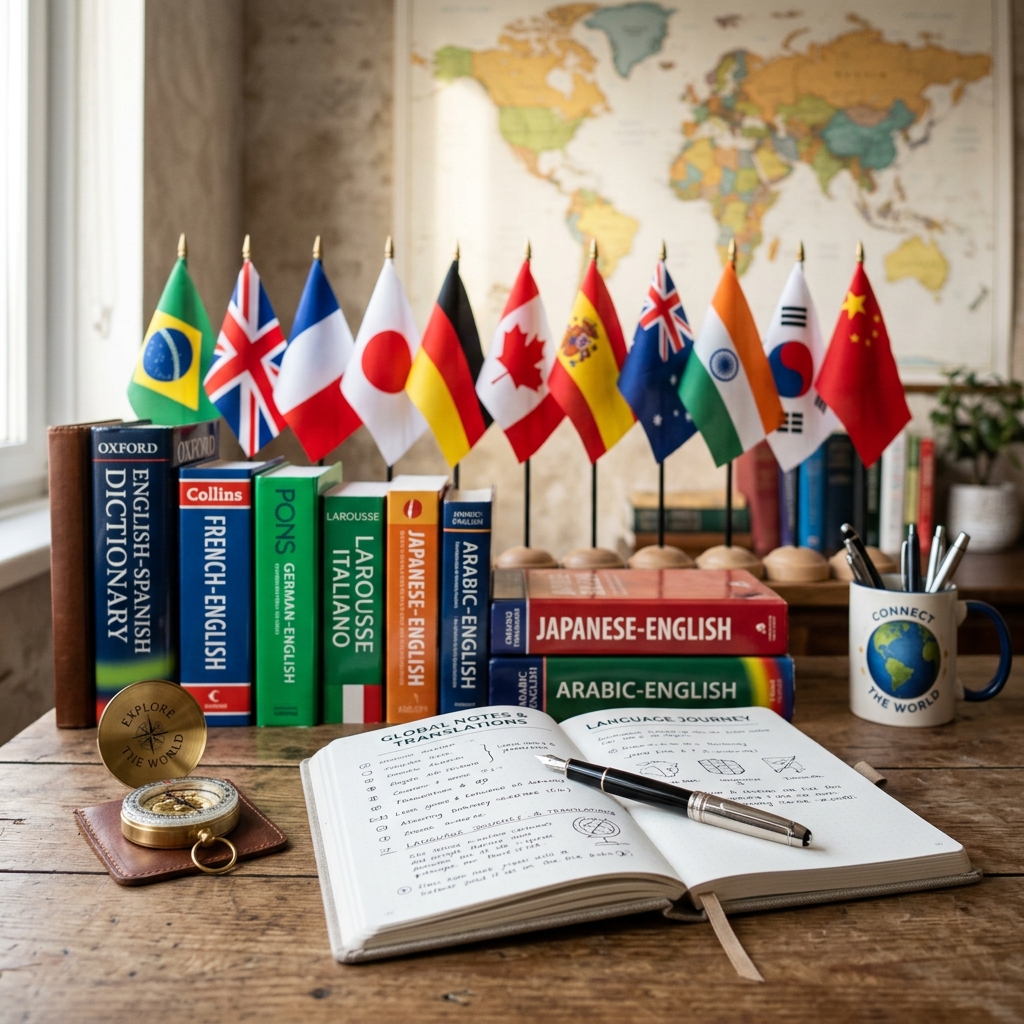
French has a reputation for being both elegant and intimidating. The good news: reading French is genuinely easier than most people expect, thanks to English and French sharing nearly 40% of their vocabulary. The bad news: understanding spoken French is genuinely harder than most people expect, because French pronunciation rules are complex and full of silent letters.
As an Amazon Associate we may earn a commission from qualifying purchases made through links on this page, at no extra cost to you.
The Language Research Desk does not run a 90-day French lab and does not claim a test fleet. The notes below are listing checks against published Category I hour bands, course structure, and how beginners usually waste the first month: buying Assimil plus a second textbook, stacking Super Duolingo on Babbel, or treating a silent grammar PDF as pronunciation practice.
Here is an honest breakdown of what learning French is actually like.
The Reading Advantage
The single biggest advantage English speakers have with French is vocabulary. The Norman Conquest of 1066 flooded English with French words, and the influence continued for centuries through cultural exchange. The result: you already know thousands of French words.
Consider these French words and their English equivalents: gouvernement/government, information/information, famille/family, important/important, situation/situation, possible/possible, attention/attention, communication/communication, restaurant/restaurant, apartment/appartement.
This means your French reading comprehension will advance quickly. Within a few months, you can often get the gist of a French news article just by recognizing cognates and picking up context clues. Cognates and false friends still need a desk check — actuellement is not “actually.”
The Pronunciation Problem
Here is where French stops being easy. French pronunciation is famously opaque for English speakers:
Silent letters are everywhere. The word beaucoup (a lot) is pronounced “bo-KOO” --- the final “p” is silent. The word temps (time/weather) is pronounced “taw” --- the “m,” “p,” and “s” are all silent. The plural marker “s” is almost always silent: les chats (the cats) sounds identical to le chat (the cat) in most contexts.
Nasal vowels have no English equivalent. French has four nasal vowel sounds that do not exist in English. Words like bon (good), vin (wine), un (one), and banc (bench) each contain different nasal vowels. Training your mouth and ears to produce and distinguish these sounds takes dedicated practice.
Liaisons blur word boundaries. In spoken French, certain word-final consonants connect to the next word’s vowel: les amis (the friends) is pronounced “lay-ZAH-mee” as if it were one fluid word. This makes it difficult for beginners to distinguish where one word ends and another begins.
The written-spoken gap. French is one of the few Category I languages where written and spoken forms feel almost like different languages to beginners. The sentence “Il est alle chez les enfants” (He went to the children’s place) contains pronunciation rules that would take paragraphs to explain.
A book without audio is teaching you to read French. That is a different product from a course that forces you to hear silent letters.
What Is Genuinely Easy About French
Despite the pronunciation challenges, several aspects of French are straightforward:
Grammar Structure
French sentence structure is similar to English. Subject-Verb-Object is the default. Questions can be formed simply by raising intonation at the end of a sentence, just like English.
Verb Patterns
French verbs are grouped into three regular conjugation families (-er, -ir, -re). The -er group alone covers about 80% of French verbs. Once you learn the -er pattern, you can conjugate thousands of verbs correctly.
Cognate Patterns
Many French-to-English word patterns are predictable:
- French -tion = English -tion (nation, station, information)
- French -ment = English -ment (gouvernement, mouvement)
- French -ible/-able = English -ible/-able (possible, comfortable)
- French -eur = English -or/-er (acteur/actor, docteur/doctor)
These patterns let you decode unfamiliar French words with reasonable accuracy.
Writing System
French uses the Latin alphabet with a few accent marks. No new alphabet to learn, and the accent marks follow consistent rules. That is the opposite of Korean Hangul-plus-grammar or Mandarin characters.
A Realistic French Learning Timeline
For self-learners practicing 30-60 minutes daily. French is still FSI Category I (600–750 classroom hours). Convert weekly hours on how long it really takes or the time calculator.
| Timeline | What You Can Do |
|---|---|
| Month 1-2 | Basic greetings, introductions, present tense, reading simple texts |
| Month 3-4 | Order food, handle basic conversations, past tense |
| Month 5-8 | Discuss daily life, understand slow/clear speech, read adapted texts |
| Month 9-12 | Follow French media with subtitles, express opinions, handle most social situations |
| Year 2 | Comfortable conversations, can read news and books with occasional dictionary use |
Note that listening comprehension typically develops more slowly than reading ability in French. This is normal. This is a workload sketch, not a fluency diary.
French vs. Spanish: Which Is Easier?
This is the most common comparison for English-speaking beginners. Both are Category I, but they have different strengths:
| Factor | French | Spanish |
|---|---|---|
| Vocabulary overlap with English | Higher (40%) | Moderate (30-40%) |
| Pronunciation difficulty | Higher | Lower |
| Phonetic spelling | Low (many silent letters) | High (read what you see) |
| Verb complexity | Similar | Similar |
| Resource availability | Excellent | Slightly better |
| Global utility | High (300M speakers, 5 continents) | Very high (500M+ speakers) |
Bottom line: Spanish has an easier entry point because pronunciation is transparent. French has a vocabulary advantage that pays off at intermediate levels. Both are excellent choices. Italian sits between them on pronunciation ease.
For a broader comparison, see our main easiest languages ranking.
How to Start Learning French
The Best Approach for Beginners
-
Start with pronunciation. Spend your first 1-2 weeks focused primarily on French sounds. Use YouTube pronunciation guides or a course that includes audio. This investment pays later. A silent PDF does not.
-
Build vocabulary through one structured course. Babbel or Duolingo for daily practice or a grammar-plus-audio book — not three Super plans. Assimil “French With Ease” is the self-study stack the best books to learn French page already covers.
-
Add listening early and often. French listening comprehension needs extra attention. Start with learner-focused podcasts (Coffee Break French, InnerFrench for low-intermediate) on the podcasts guide, and work up to native content.
-
Speak when you have a few sentences, not on day one of a paid package. Find a tutor or language exchange partner through italki or Tandem after you can greet and answer “what do you do?” Compare best online language tutors and best language exchange apps.
-
Use your English vocabulary. When you encounter a new French word, check if there is an English cognate. There usually is — then check it is not a false friend.
What to buy — and what to skip
Assimil French with Ease is the listing the desk already uses when you want bilingual lessons plus audio. Book + audio is the unit. Check price on Amazon →
Listing check (The Language Research Desk): Confirm French with Ease (not a different Assimil language, and not Using French / advanced Assimil). A used copy without the download code is a different product. Dialogues lean European French. The French books page walks editions in more detail.
Practice Makes Perfect: Complete French All-in-One is a drill/reference book, not a beginner course you read cover to cover. Check price on Amazon →
Listing check: Confirm Complete French All-in-One (or the grammar title you actually want), not a Spanish Practice Makes Perfect SKU in the same series. Paperback vs ebook is fine if the exercises and answer key are present.
Vis-Ed French Vocabulary Cards are the paper-card listing the desk already uses on the tools kit page if you hate screens. Optional. Not a pronunciation course.
Listing check: Confirm French (not Spanish Vis-Ed) and the card count on the Amazon page.
| Tempting add-on | Desk reading |
|---|---|
| Assimil French + Practice Makes Perfect + Pimsleur | Two structured courses plus extra audio. Assimil already has audio. Add Pimsleur only if you will not open the book in a car. |
| Assimil French + Assimil Italian in week 1 | Two languages. Finish lesson 20 of one. |
| Super Duolingo + Babbel + a lifetime deal | Three payment plans, one job. Pick one app. |
| A French movie box set as your “course” | Input later. Not week-1 grammar. |
| Tutor package + exchange Pro in month one | One speaking path. Free partner first. |
The Category I buying plan is on how to learn the easiest languages for English speakers.
Is French Worth the Effort?
The pronunciation curve makes French slightly harder at the start than Spanish or Italian. But the vocabulary overlap with English means your investment pays off increasingly well at intermediate and advanced levels. French reading ability, in particular, develops faster than in most other languages.
French is also arguably the most globally useful language after English and Spanish, with official status in 29 countries and strong career value in international organizations, diplomacy, fashion, gastronomy, and luxury goods.
For more language comparisons, browse our easiest languages for business or easiest languages for travel guides. Portuguese is the other Romance honesty page if nasal vowels are the deciding factor.
Frequently Asked Questions
Is French harder than Spanish for English speakers? ▼
French and Spanish are both FSI Category I languages with similar time estimates (600-750 hours). However, most learners find French pronunciation harder than Spanish due to silent letters, nasal vowels, and liaisons. Spanish pronunciation is more phonetic and transparent. Vocabulary acquisition is often faster in French due to its closer historical ties to English.
Why is French pronunciation so difficult? ▼
French has numerous silent letters (the final consonants in 'beaucoup,' 'est,' and 'temps' are all silent), nasal vowels that do not exist in English, mandatory liaisons between words, and a significant gap between written and spoken forms. The sentence 'les oiseaux sont beaux' (the birds are beautiful) sounds nothing like an English speaker would guess from reading it.
How much English vocabulary comes from French? ▼
Approximately 29-45% of English vocabulary has French or Norman French origins, depending on how you count. This is due to the Norman Conquest of 1066, when French became the language of the English court and government for roughly 300 years. Words like 'government,' 'justice,' 'restaurant,' 'apartment,' 'machine,' and thousands more entered English from French.
Is French useful to learn in 2026? ▼
Yes. French is spoken by approximately 300 million people across 5 continents, is an official language of the UN, EU, NATO, and the International Olympic Committee, and is the second most commonly taught language worldwide. It has strong career value in diplomacy, international business, fashion, and food industries.
Can I learn French by watching French movies? ▼
Movies and TV are excellent supplementary resources but are rarely sufficient alone. Beginner content is spoken too fast for new learners to parse. Start with podcasts designed for learners (InnerFrench, Coffee Break French), graduate to children's shows, then to adult content with French subtitles. Passive watching without active study produces limited results.
Which French book should I buy first? ▼
One structured course only. Assimil French With Ease is the listing the desk already uses when you want bilingual lessons plus audio. Skip a second beginner book and skip Practice Makes Perfect as a 'course' you will finish in a weekend. The French books page covers editions in more detail.
Do I need Pimsleur and Assimil together? ▼
Usually no. Assimil already includes audio. Add commute-only audio if you will not open the book in a car. Do not buy two full beginner methods for the same month.
We research and compile information about language learning from linguistic studies, FSI data, and language learning communities.
Related reading
 Language Rankings
Easiest Asian Languages for English Speakers: Ranked by Difficulty
Which Asian languages are easiest for English speakers? We rank them using FSI data, grammar complexity, and writing systems.
 Language Rankings
Easiest European Languages to Learn: Complete Ranking for English Speakers
All major European languages ranked by difficulty for English speakers using FSI data, grammar complexity, and resources.
Language RankingsFSI Language Difficulty Rankings Explained: How Long Does Each Language Take?
The Foreign Service Institute ranks 70+ languages by difficulty. Learn how FSI categories work and what the hour estimates really mean.