Language Learning Plateau: How to Break Through When Progress Stalls
The Language Research Desk
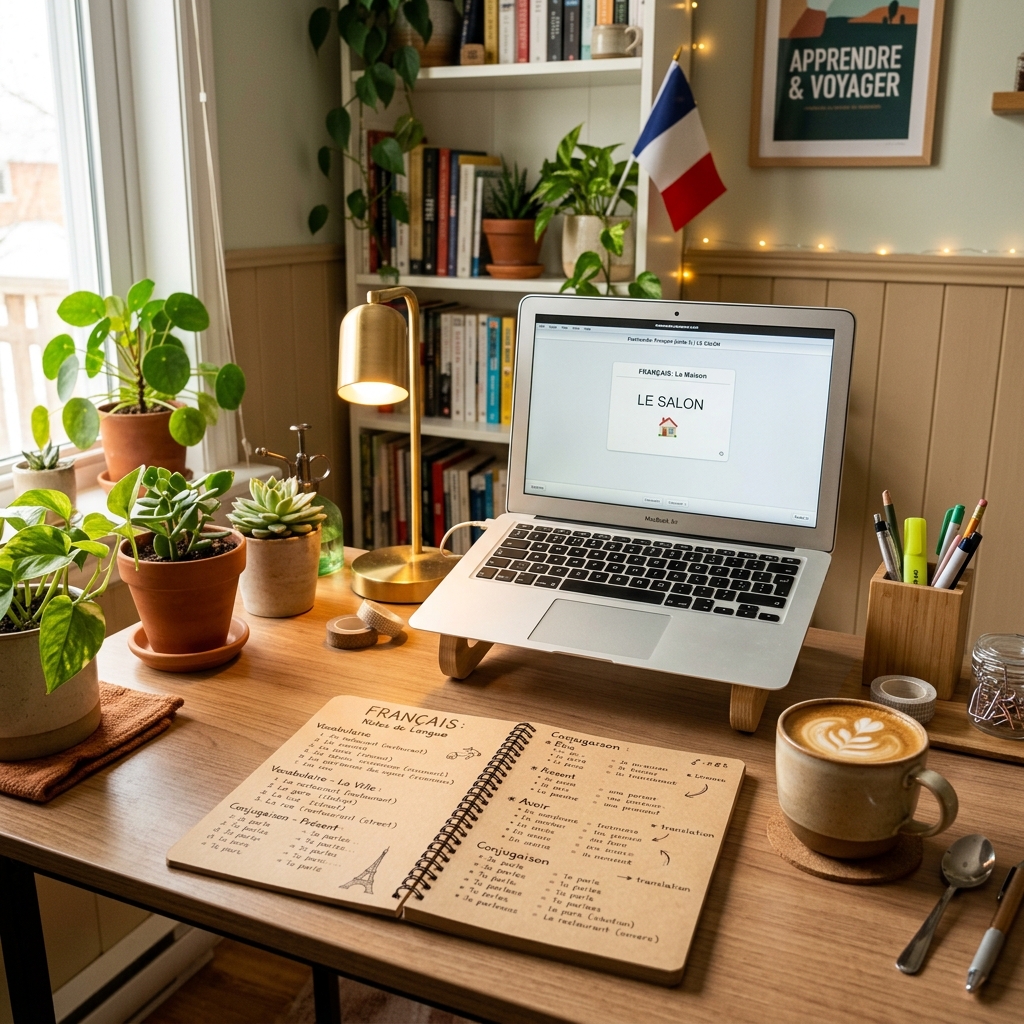
This page is the tactics sibling: what to change this week when progress stalls. The shorter diagnosis of why plateaus happen is on Stuck at Intermediate? How to Break Through the Language Learning Plateau. We keep both URLs; this one is the method-change checklist.
As an Amazon Associate we may earn a commission from qualifying purchases made through links on this page, at no extra cost to you.
The Language Research Desk does not run a 90-day lab and does not claim a test fleet. The notes below are listing checks against published course structure and how intermediate learners usually waste a stall: buying a second beginner app, stacking two tutor platforms, or treating a fat grammar book as a course they will finish in a weekend.
You have been studying for months. Maybe a year. You blew through the beginner stage, built a solid vocabulary, and started having real conversations. Then everything stopped.
You understand most of what people say but miss key details. You can express yourself but fumble through complex ideas. Your error rate has plateaued. Your vocabulary feels frozen. Your grammar is stuck in the same five patterns.
Welcome to the intermediate plateau. Almost every language learner hits it, and it is the number one reason people abandon languages they were genuinely learning well.
This guide covers why the plateau happens and specific strategies to break through it. No vague advice about “just practice more.” These are concrete changes you can make this week.
Why the Plateau Happens
Understanding the mechanics helps. The plateau is not a sign that you have reached your limit. It is a natural result of how language acquisition works.
Beginner learning is front-loaded with easy wins. The first 500-1,000 words you learn are the highest-frequency words in the language. These words cover 70-85% of everyday conversation. Learning each new word produces a noticeable jump in comprehension. Progress feels fast because it is fast, relative to effort.
Intermediate learning follows diminishing returns. Words 1,000-5,000 are less frequent. Each new word you learn adds a smaller percentage to your overall comprehension. You need to learn five times as many words to get the same comprehension bump you got as a beginner. And grammar moves from clear rules to nuanced exceptions and style choices.
Your brain is restructuring, not stalling. Neurolinguistic research shows that intermediate learners are actually undergoing significant cognitive reorganization. Your brain is shifting from consciously translating to processing the language more directly. This transition takes time and feels like stagnation, but it is the most important phase of language development.
Signs You Are on a Plateau (Not Just Lazy)
There is a difference between a plateau and simply not studying enough. True plateau symptoms include:
- You study regularly but feel like nothing is sticking
- You understand 70-80% of conversations but cannot break into 90%+
- Your mistakes are the same ones you have been making for months
- You default to the same simple sentence structures even when you know more complex ones
- Native content (TV, podcasts, books) feels permanently just out of reach
If you recognize these symptoms, the problem is not effort. It is method.
Strategy 1: Change Your Input Level
The most common plateau cause is consuming content that is either too easy or too hard.
Too easy: If you are still using beginner apps and A1-A2 material when you are at B1, you are reviewing what you already know. Comfortable? Yes. Useful? Barely.
Too hard: If you are trying to watch native TV shows and understanding less than 50%, you are drowning in noise. Your brain cannot acquire language from input it cannot parse.
The sweet spot is 70-85% comprehension. You should understand most of what you read or hear, with a few unknown words per paragraph or minute of audio that you can figure out from context. This is what linguist Stephen Krashen called “i+1” input --- just slightly above your current level.
Finding the right level:
- Graded readers: Publishing houses like Olly Richards’ series and Penguin Readers produce books specifically leveled for language learners. The book Short Stories in Spanish by Olly Richards is a good example of B1-level reading that pushes you without drowning you. Confirm the language edition and “for Beginners” vs the intermediate sequel — those are different SKUs. Check price on Amazon →
- Learner podcasts at your level: Shows like News in Slow Spanish or InnerFrench are designed for the intermediate sweet spot. See our best language learning podcasts guide for more options.
- YouTube with subtitles: Native content with target-language subtitles lets you read along while listening, which bridges the comprehension gap.
Strategy 2: Stop Studying Grammar Rules, Start Noticing Patterns
At the intermediate level, explicit grammar study produces diminishing returns. You already know the major rules. What you need now is implicit grammar acquisition --- absorbing patterns through massive exposure rather than memorizing rules from a textbook.
How to practice pattern noticing:
- Read or listen to native content at your level
- When you encounter a sentence that “sounds right” but uses a structure you could not produce yourself, write it down
- Collect 5-10 of these sentences per week
- Review them regularly --- not to memorize rules, but to internalize the patterns
This technique is called “sentence mining,” and it is one of the most effective intermediate strategies. Over time, your brain starts producing these patterns naturally because it has absorbed enough examples.
Strategy 3: Focus on Output, Not Just Input
Many intermediate learners have a lopsided skill set: strong comprehension, weak production. They can understand a conversation but struggle to contribute to one. This happens because passive skills (listening, reading) develop faster than active skills (speaking, writing).
The fix is deliberately increasing your output practice:
- Writing: Keep a daily journal in your target language. Even 5-10 sentences per day forces you to actively construct grammar and recall vocabulary. Tools like LangCorrect or journaly let you get corrections from native speakers.
- Speaking: Book regular conversation sessions. Platforms like italki and Preply connect you with affordable tutors. Even one 30-minute session per week pushes your speaking forward. Compare options in best online language tutors, or use a free partner from best language exchange apps if budget is the constraint.
- Self-talk: Narrate your daily activities in the target language. Describe what you see, what you are doing, what you plan to do. This builds fluency without needing a conversation partner. Our guide on thinking in a new language has more techniques for this.
Strategy 4: Learn Topic-Specific Vocabulary
General vocabulary gets you through general conversations. But the intermediate plateau often means you can talk about everyday topics but fall apart when the conversation shifts to anything specific --- your job, your hobbies, current events, abstract ideas.
The solution: Build vocabulary around your actual interests and needs.
If you are into cooking, learn 100 food and cooking terms in your target language. If you follow soccer, learn the sports vocabulary. If you work in tech, learn the professional terminology.
This approach has two benefits:
- It gives you vocabulary you will actually use, which means you will retain it
- It lets you have real conversations about things you care about, which is more motivating than textbook dialogues about fictional hotel bookings
Strategy 5: Get Uncomfortable With Errors
Intermediate learners develop a dangerous habit: they find a comfort zone of expressions that work and stop experimenting. They avoid complex grammar because simple grammar gets the message across. They avoid new words because their existing vocabulary is “good enough.”
This is the linguistic equivalent of going to the gym and lifting the same weight every day. You maintain what you have, but you do not grow.
Force yourself to:
- Use a new grammar structure you learned, even if you get it wrong
- Pause conversations to ask “How would a native speaker say what I just said?”
- Record yourself speaking and listen back (uncomfortable but revealing)
- Ask tutors to correct everything, not just major errors
Making errors and getting corrected is the mechanism through which intermediate learners improve. Avoiding errors keeps you at the same level indefinitely.
Strategy 6: Change Your Routine Entirely
Sometimes the best plateau-breaker is a complete reset of your study routine. Not because your old routine was bad, but because your brain has adapted to it and is no longer being challenged.
If you have been app-focused, switch to a textbook. If you have been textbook-focused, switch to full immersion with native content. If you have been studying alone, start conversation sessions. If you have been doing conversation sessions, add intensive reading.
The language learning methods comparison on this site can help you identify methods you have not tried yet. If the stall is really attrition (you stopped using the language) rather than a plateau, switch to how to maintain a language with no one to speak.
A practical “reset routine” for an intermediate learner:
| Day | Activity | Time |
|---|---|---|
| Monday | italki conversation lesson | 45 min |
| Tuesday | Read graded reader + note new vocab | 30 min |
| Wednesday | Listen to intermediate podcast, shadow repeat | 30 min |
| Thursday | Write journal entry, submit for correction | 20 min |
| Friday | italki conversation lesson | 45 min |
| Saturday | Watch native show with target-language subtitles | 60 min |
| Sunday | Review vocabulary + rest | 15 min |
Notice the variety: six different activities across the week, hitting reading, writing, listening, and speaking. No single activity dominates, and the novelty keeps your brain engaged.
Strategy 7: Set Micro-Goals, Not Macro-Goals
“Reach B2 by December” is a motivating goal but a useless daily guide. When you are on a plateau, you need goals you can achieve this week.
Good micro-goals for plateau-breakers:
- Learn 20 words related to [specific topic] this week
- Have a 15-minute conversation without switching to English
- Read one news article per day and summarize the main point
- Write 5 sentences using the subjunctive tense
- Listen to one podcast episode and understand 80%+ without a transcript
These small wins accumulate into real progress and --- just as importantly --- they prove to you that you are still improving. The plateau’s worst effect is not on your language skills but on your motivation. Micro-goals protect against that.
When to Seek Professional Help
If you have tried multiple strategies for 2-3 months and still feel stuck, consider a structured intermediate course or an experienced tutor who specializes in your level. A good teacher can diagnose specific weak spots you cannot see yourself.
Books designed for the intermediate push can also provide structured progression. Practice Makes Perfect: Complete Spanish Grammar is a solid example for Spanish learners at the B1 level who need to systematically fill grammar gaps.
Listing check (The Language Research Desk): Confirm you are buying the Complete Spanish Grammar workbook (not a different Practice Makes Perfect title), and check paperback vs ebook and the current seller on the Amazon page. We link the edition used as a B1 grammar drill book; Amazon may surface a later printing or a bundle. Check price on Amazon →
How to work an intermediate book this week
A plateau is a method problem. A new book that sits closed is not a method.
Reader session (25–30 minutes), three days a week:
- Read a short chapter for gist. Do not stop on every unknown word.
- Re-read one page slowly. Write down two sentences you could not have produced.
- Say those two sentences aloud. If you cannot, the page was recognition-only.
- Park at most five leftover words. The retention job is on best flashcard apps for vocabulary. Do not card the whole story.
Grammar-workbook session (20–25 minutes), two days a week — only if the same error repeats:
- Open the section that matches the error (ser/estar, preterite vs imperfect), not chapter 1.
- Do one exercise block. Check the answer key immediately.
- Write three original sentences using the corrected pattern.
- Bring those sentences to a tutor or an exchange partner once that week.
Who each listing is for
- Olly Richards beginner Spanish reader: Low B1. If native news is still noise, this is the input lift. If you already read simple articles, skip to the intermediate book in the same series or to native pages.
- Practice Makes Perfect Complete Spanish Grammar: A lookup-and-drill book for holes a conversation produced. It is not a course you read cover to cover, and it is not a speaking product.
- italki / Preply hour: Interruption and diagnosis. Skip a class pack if you have unused credits.
- A second phrase app: Almost never the plateau fix. You already know beginner tiles.
Skip-buy notes when progress stalls
| Tempting add-on | Desk reading |
|---|---|
| A new beginner textbook (Madrigal, Assimil, Easy Spanish Step-by-Step) | You are past that job. Those titles live on best books to learn Spanish. |
| 501 Spanish Verbs as a “course” | A reference table. Open it when a sentence fails. |
| Two tutor marketplaces + exchange Pro | One speaking path. Free partner first if budget is the constraint. |
| Native Netflix with no subtitles at 40% comprehension | Noise. Step down to a graded reader or a learner podcast from best podcasts to learn languages. |
| A 10,000-card Anki dump | Cap new cards. The plateau is often production, not a missing deck. |
If the stall is really attrition (you stopped using the language), switch to how to maintain a language with no one to speak. If you only needed the diagnosis, stay on the plateau sibling.
The Bottom Line
The intermediate plateau is the most common reason people quit a language. It feels permanent, but it is not. The fix is almost always a combination of harder input, more output practice, and a willingness to make mistakes. Change your methods, set achievable weekly goals, and remember that the plateau is not a wall --- it is a long, flat stretch on a road that goes much further. Keep walking.
Frequently Asked Questions
Why do language learners hit a plateau? ▼
Plateaus happen because early progress comes from learning common, high-frequency vocabulary and simple grammar, which produces fast, visible improvement. At the intermediate level, new words are less frequent, grammar becomes more nuanced, and improvement becomes harder to notice. Your brain is still learning, but the gains are less obvious.
How long does a language learning plateau last? ▼
It varies, but most intermediate plateaus last 2-6 months. The plateau is not a period of zero learning --- it is a period where progress is happening below the surface. Changing your study methods and input sources usually shortens it significantly.
Is the intermediate plateau the hardest part of language learning? ▼
Many experienced learners say yes. The beginner stage has constant visible progress. The advanced stage has the reward of near-native comprehension. The intermediate stage feels like a long gray middle where you can communicate but make constant errors. This is normal and temporary.
Should I switch languages if I hit a plateau? ▼
No. Switching languages when you plateau means you will never push past the intermediate level in any language. Instead, change your methods, not your language. The plateau is a signal that your current approach needs adjusting, not that the language is wrong for you.
Does immersion help break a plateau? ▼
Immersion can help, but only if it is the right kind. Passive immersion like background TV produces minimal gains at the intermediate level. Active immersion --- conversations with native speakers, reading at your level, and engaging with content where you understand 70-80% --- is what pushes you forward.
Which book should I buy to break an intermediate plateau? ▼
One leveled reader at your level, or one intermediate grammar workbook if the same five errors keep repeating. Skip a second beginner course. Skip 501 verbs as a “course.” The Language Research Desk treats Olly Richards readers as B1 input and Practice Makes Perfect Complete Spanish Grammar as a drill book, not as fluency products.
Should I pay for more tutor hours when I plateau? ▼
Pay when you need interruption and a diagnosis, not when you are bored of your app. One weekly 30-minute lesson that corrects the same error is enough. Two marketplaces plus an exchange Pro subscription in the same week is usually the same speaking job twice.
We research and compile information about language learning from linguistic studies, FSI data, and language learning communities.
Related reading
Learning TipsCognates and False Friends: Your Shortcut (and Pitfall) in Language Learning
Cognates are free vocabulary. False friends are embarrassing traps. Here is how to tell the difference.
Learning TipsHow Many Words Do You Need to Be Fluent in a Language?
The real vocabulary numbers for fluency, from survival basics to native-level comprehension. Data-backed word count targets.
Learning TipsHow to Maintain a Second Language When You Have No One to Speak With
Keep a second language alive with no conversation partner. Solo speaking, reading, and listening routines that prevent attrition.